How Much Does a Trip to Iceland Cost?
A week in Iceland costs most travelers $2,200 to $3,800 per person, flights included. Camper-van travelers who cook their own food do it for around $1,400. Stay in hotels and eat in restaurants twice a day and it’s $5,500.
Iceland is the rare destination where the flight is cheap and everything after it is expensive. Reykjavík is a two-and-a-half hour hop from London and five from Boston, often for under $400 return. Then you land, buy a sandwich for $14, and understand the rest of the trip.
Prices are in Icelandic króna, roughly ISK 140 to the US dollar.
Daily cost at three budget levels
| Camper / hostel | Mid-range | Comfortable | |
|---|---|---|---|
| Accommodation | ISK 4,500 ($32) | ISK 24,000 ($171) | ISK 45,000 ($321) |
| Food | ISK 4,000 ($29) | ISK 9,000 ($64) | ISK 18,000 ($129) |
| Car and fuel | ISK 9,000 ($64) | ISK 12,000 ($86) | ISK 18,000 ($129) |
| Activities | ISK 2,000 ($14) | ISK 8,000 ($57) | ISK 18,000 ($129) |
| Daily total | ISK 19,500 ($139) | ISK 53,000 ($379) | ISK 99,000 ($707) |
The car line assumes two people sharing. Solo travel in Iceland is punishing on cost, because the car is the same price alone as it is for four.
Flights
Genuinely reasonable, and often the cheapest part of the trip.
From the US east coast, round trip runs $350 to $700 on Icelandair or PLAY. From the west coast, $550 to $900. From London, Dublin, or most of northern Europe, £90 to £250.
Iceland works well as a stopover — Icelandair lets you break a transatlantic journey in Reykjavík for up to a week at no extra airfare, which is the cheapest possible way to see the country.
The car, which is not optional
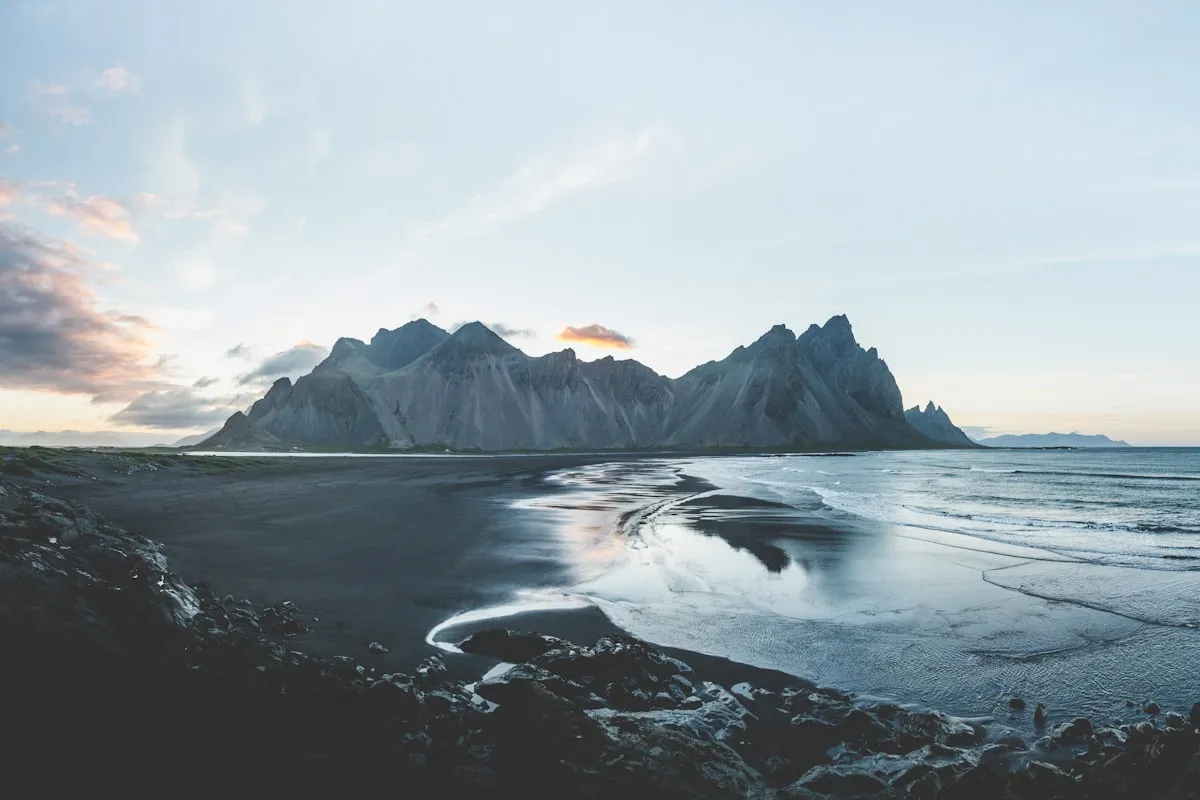
Outside Reykjavík there is effectively no public transport. The Ring Road, the waterfalls, the black sand beaches, and the fjords all require your own vehicle.
- Small 2WD car — ISK 8,000–14,000 a day ($57–100) in summer, less in winter
- 4x4 SUV — ISK 15,000–28,000 a day ($107–200). Required for F-roads in the highlands, which open only from roughly late June to September.
- Camper van — ISK 14,000–25,000 a day ($100–179), and it replaces your accommodation
Fuel is around ISK 320 per litre, which is roughly $8.60 a US gallon. Driving the full Ring Road is about 1,330 km, so budget ISK 30,000–40,000 ($215–285) in fuel for a week.
Then insurance. Rental companies push gravel protection and sand-and-ash protection, and unlike most upsells these are worth considering — windscreen chips from gravel roads are extremely common, and a south-coast ash storm can strip a car’s paint. Expect ISK 3,000–6,000 a day for full coverage.
Accommodation
- Campsite — ISK 2,000–3,500 per person ($14–25)
- Hostel dorm — ISK 6,000–9,500 ($43–68)
- Guesthouse double — ISK 18,000–30,000 ($129–214)
- Hotel — ISK 30,000–55,000 ($214–393)
- Countryside farm stay — ISK 20,000–35,000 ($143–250)
Camping is the great Icelandic budget hack in summer. A camping card covering many sites costs around ISK 25,000 for the season and pays for itself in a week.
Book far ahead for June through August. Iceland has more visitors than beds in high summer, and last-minute rates are brutal.
Food
This is where the sticker shock lands.
- Supermarket meal ingredients, per person per day — ISK 2,500–4,000 ($18–29)
- Bakery pastry and coffee — ISK 1,200–1,800 ($9–13)
- The famous hot dog, Bæjarins Beztu — ISK 750 ($5)
- Petrol station burger and chips — ISK 2,500–3,500 ($18–25)
- Restaurant main course — ISK 3,800–6,500 ($27–46)
- Restaurant dinner with a drink — ISK 7,000–11,000 ($50–79)
- Beer in a bar — ISK 1,400–1,900 ($10–14)
- Bottle of wine from Vínbúðin — ISK 2,500–4,500 ($18–32)
Shop at Bónus or Krónan. They’re the discount chains, they’re everywhere, and they’re perhaps a third the price of eating out. Alcohol is sold only at state Vínbúðin stores and is heavily taxed — the duty-free shop at Keflavík arrivals is meaningfully cheaper, and locals use it.
Cooking most meals cuts a week’s food bill from roughly $450 to $180 per person.
Activities
The best of Iceland is free. Waterfalls, geothermal fields, glacier viewpoints, black sand beaches, hot springs in rivers, and the northern lights cost nothing. What you pay for is anything guided.
- Blue Lagoon — ISK 9,900–15,900 ($71–114), booking required
- Sky Lagoon — ISK 12,999–19,999 ($93–143)
- Local municipal pool — ISK 1,200–1,500 ($9–11), and better value than either
- Glacier hike — ISK 15,000–25,000 ($107–179)
- Ice cave tour, winter — ISK 20,000–35,000 ($143–250)
- Whale watching — ISK 11,000–14,000 ($79–100)
- Snorkelling at Silfra — ISK 20,000–28,000 ($143–200)
- Parking at popular sites — ISK 750–1,000 ($5–7)
The municipal swimming pools deserve their own mention. Every town has one, they’re geothermally heated, they cost about $10, and they’re where Icelanders actually go. Several are better than the lagoons that charge ten times as much.
A real seven-day budget
Two people, Ring Road, small 2WD car in September, guesthouses, cooking most meals:
| Cost | |
|---|---|
| Flights, 2 people | $900 |
| Car rental, 7 days | ISK 77,000 ($550) |
| Insurance | ISK 28,000 ($200) |
| Fuel | ISK 35,000 ($250) |
| Guesthouses, 6 nights | ISK 132,000 ($943) |
| Groceries | ISK 42,000 ($300) |
| Restaurants, 4 meals | ISK 32,000 ($229) |
| Activities | ISK 45,000 ($321) |
| Total | ≈ $3,693 |
That’s about $1,850 each. Two people in a camper van cooking all their own food do the same route for around $2,300 total.
What people underestimate
Fuel. Iceland looks small on a map and isn’t. The Ring Road is 1,330 km and the detours add hundreds more.
Single supplements. Almost every cost here is per-vehicle or per-room. A solo traveler pays close to double per head.
Weather closing roads. Winter storms shut sections of the Ring Road with little notice, and the highland F-roads are closed most of the year. A cancelled plan often means a paid-for tour you can’t take.
The Blue Lagoon reflex. It’s ISK 9,900 minimum, it’s twenty minutes from the airport, and almost everyone books it. The pool in Hveragerði costs ISK 1,300 and has fewer people in it.
Keeping track in a card-only country
Iceland is close to cashless. Cards work everywhere including remote petrol pumps, and many visitors never withdraw a króna. That makes tracking easier in one way and harder in another — the charges are all there in your bank statement, but they land in króna, days later, at whatever rate your bank chose.
Spentrip is useful for keeping the running total in your own currency as you go, rather than discovering it afterwards. Each expense stores both the króna amount and the converted figure, so the trip total is honest rather than a surprise. Multi-currency tracking, categorisation, and the spending charts are free; receipt scanning is premium.
On Iceland trips the breakdown is almost always the same and almost always unexpected: the car and fuel together beat accommodation, and food beats activities. Knowing that in advance is worth more than any individual saving.
Common questions
How much money do I need per day in Iceland?
Per person, excluding flights: about $139 camping or hostelling, $379 mid-range, and $707 comfortable. Two people sharing a car and a room do far better per head than one.
Why is Iceland so expensive?
A small population on a remote island imports nearly everything, and pays high wages to do it. Add substantial taxes on alcohol and fuel and a tourism industry that outgrew its infrastructure. The costs are real rather than a tourist mark-up — Icelanders pay them too.
Can you visit Iceland on a budget?
Yes, and more easily than its reputation suggests, because the scenery is free. Camp or hostel, rent the smallest car that suits the season, shop at Bónus, swim in municipal pools instead of the lagoons, and skip guided tours in favour of self-driving. That’s a $140-a-day trip through the same landscapes people pay $700 a day to see.
Is the Blue Lagoon worth the money?
It’s a well-designed experience and it’s twenty minutes from the airport, which makes it an easy first or last stop. But at ISK 9,900 and up it’s one of the most expensive single items on a budget trip, and Iceland’s municipal pools deliver most of the same pleasure for a tenth of the price. Do one, not both.
What’s the cheapest time to visit Iceland?
October through April, excluding Christmas and New Year. Flights, cars, and accommodation all fall sharply. The trade-off is short daylight, closed highland roads, and real winter driving — but it’s also the only time you’ll see the northern lights.
Do I need a 4x4 in Iceland?
Not for the Ring Road and the south coast in summer — a small 2WD is fine and much cheaper. You need a 4x4 for the highland F-roads, which are legally restricted to them, and it’s strongly advisable in winter anywhere outside the capital.
Iceland’s economics are the reverse of most trips: the flight is a bargain and the ground costs are brutal. The travelers who come home under budget are the ones who worked that out before arriving and put their money into the car and the days, rather than the hotel and the tours.